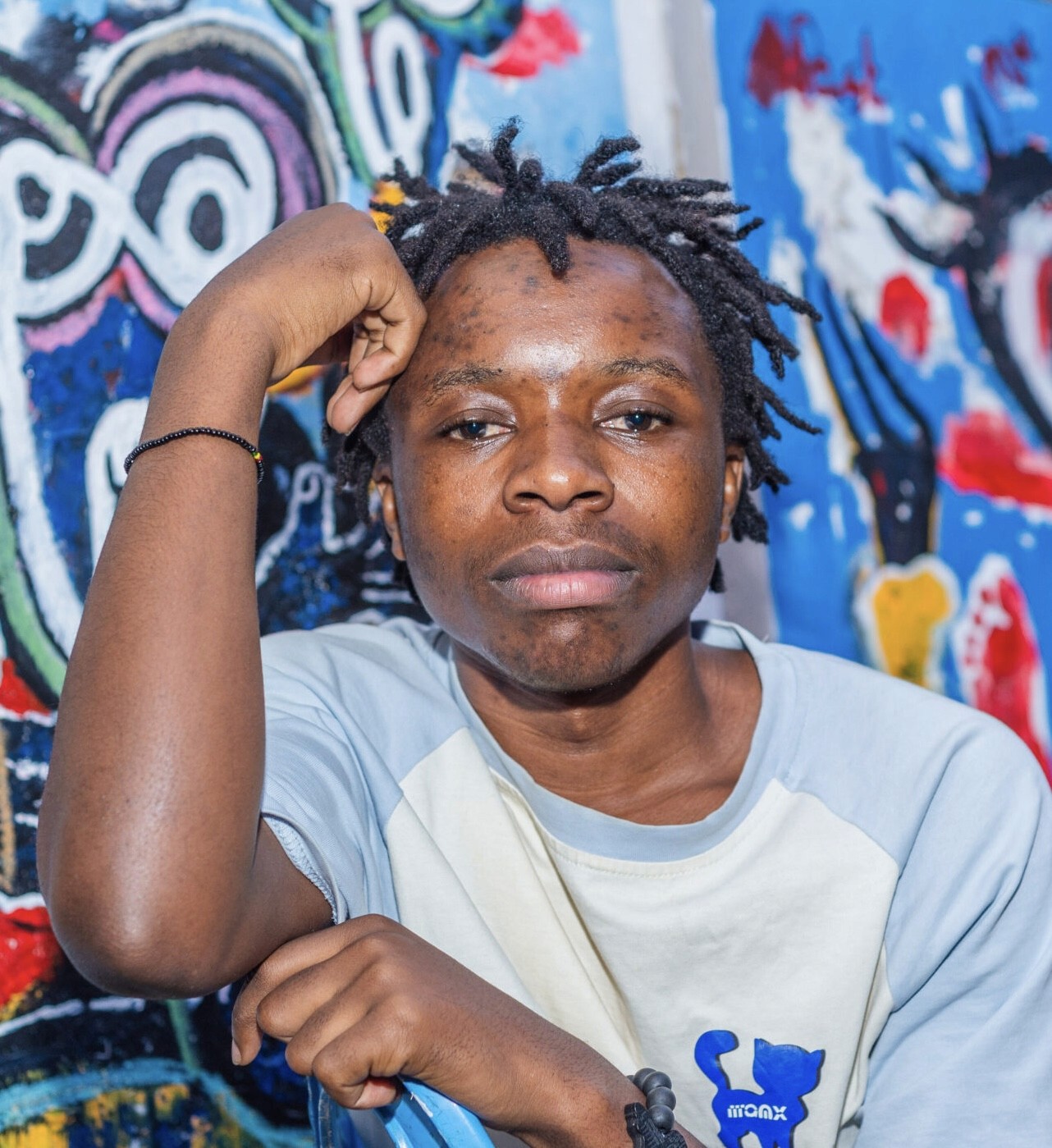


Aksanti Bienfait Ba Paints the Space Between Survival and Hope
For the Congolese artist based in Kampala, Uganda, painting began long before exhibitions, awards, or international recognition.
For the Congolese artist based in Kampala, Uganda, painting began long before exhibitions, awards, or international recognition.
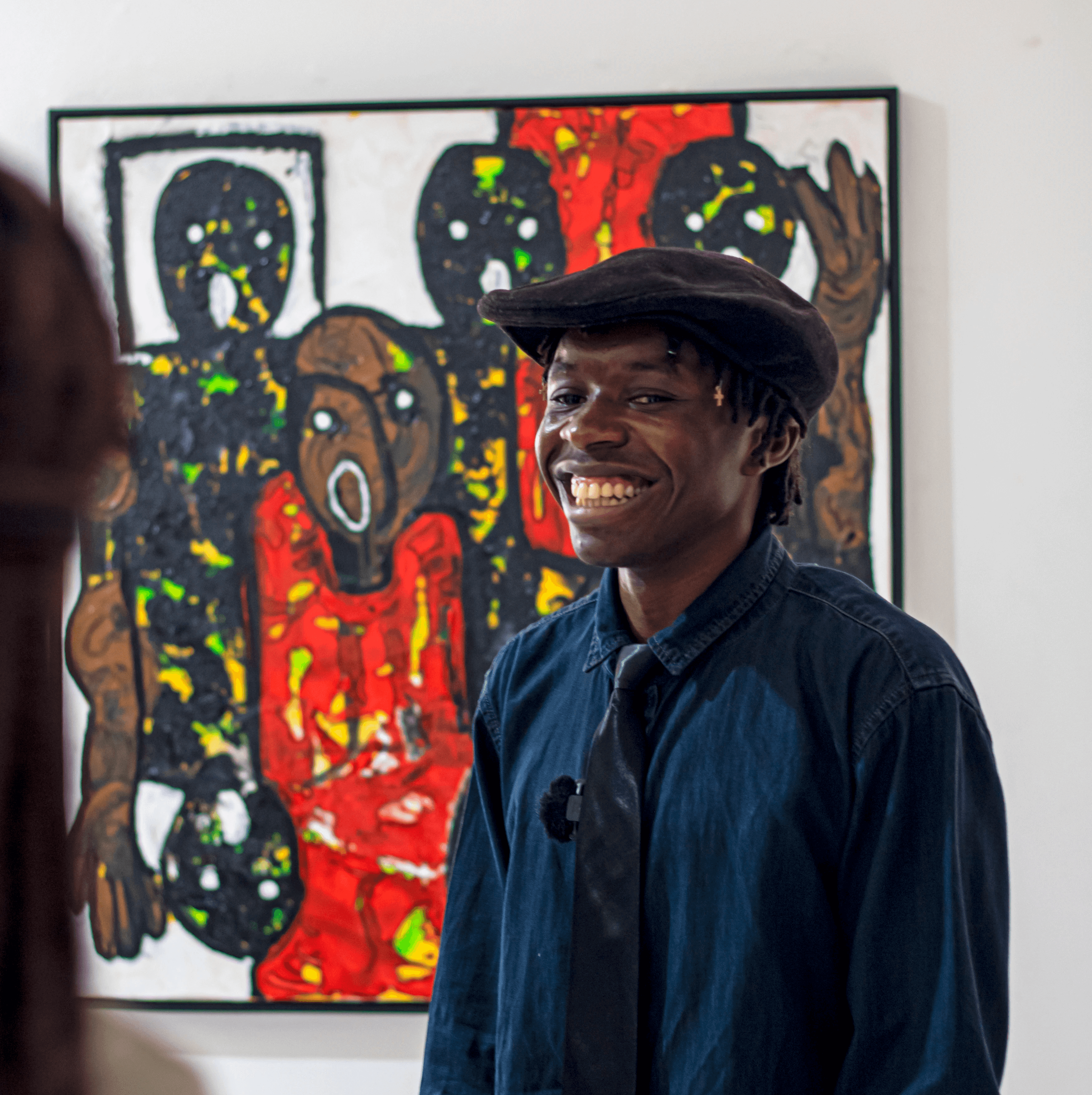
Aksanti Bienfait Ba does not believe he chose art. “Art chose me,” he says.
For the Congolese artist based in Kampala, Uganda, painting began long before exhibitions, awards, or international recognition. It began in survival. Forced to flee the Democratic Republic of Congo with his family due to conflict, Aksanti spent part of his life in a refugee camp where uncertainty became a daily reality. What could have been the end of one story became the beginning of another.
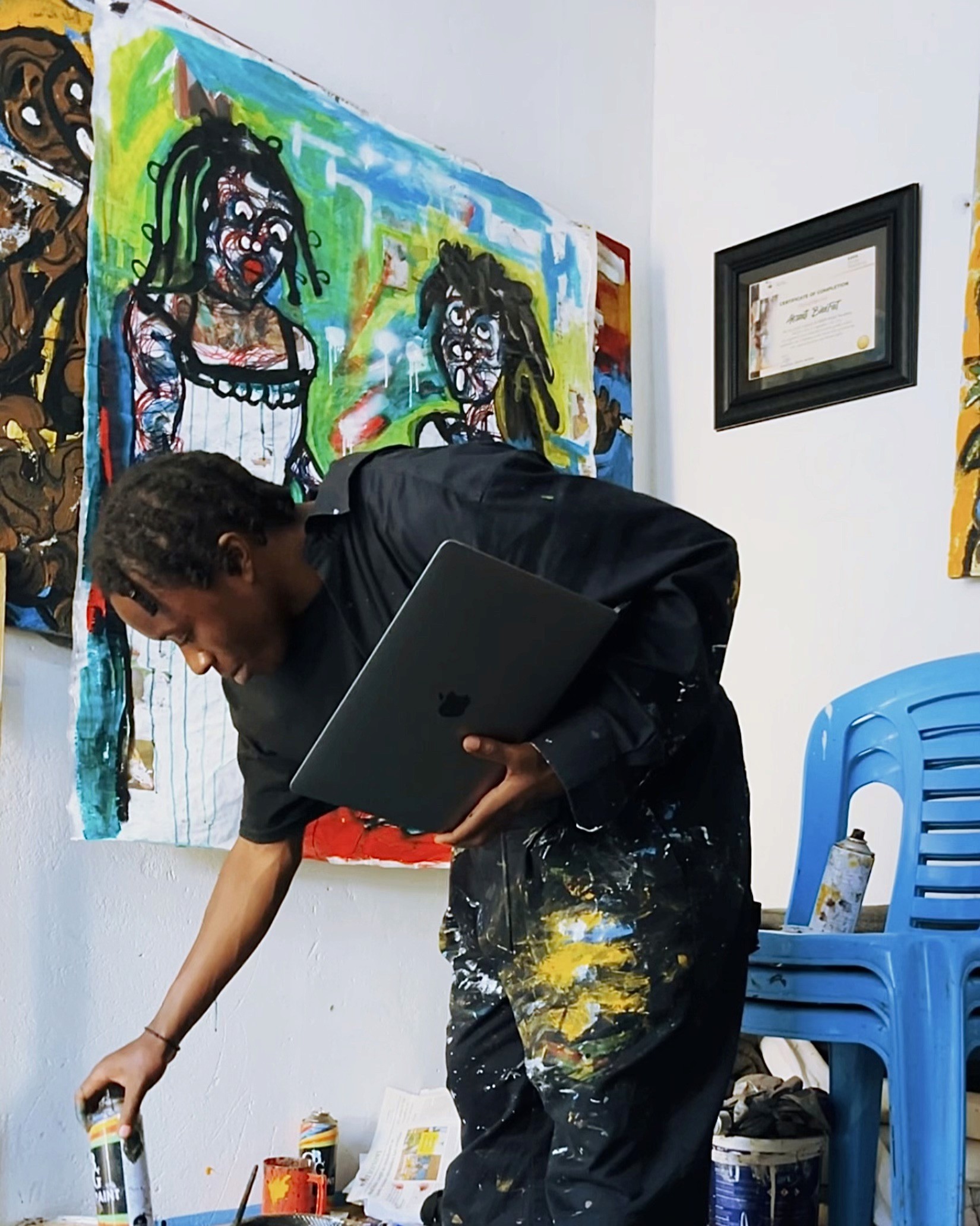
Life inside the camp was difficult. The future felt unclear. As a child, Aksanti had always enjoyed sketching and painting, but at the time, he imagined becoming a doctor. That dream changed when displacement reshaped everything he thought life would be.
Instead of seeing the refugee camp only as a place of hardship, he eventually began to view it as one that revealed his purpose. “I found myself there,” he says. “I found my voice.”
Painting became more than a creative outlet. It became therapy. It became a way to process questions that felt too large for words. It became a place where grief, identity, migration, and memory could exist together on a canvas.
That personal journey remains at the center of his work today.
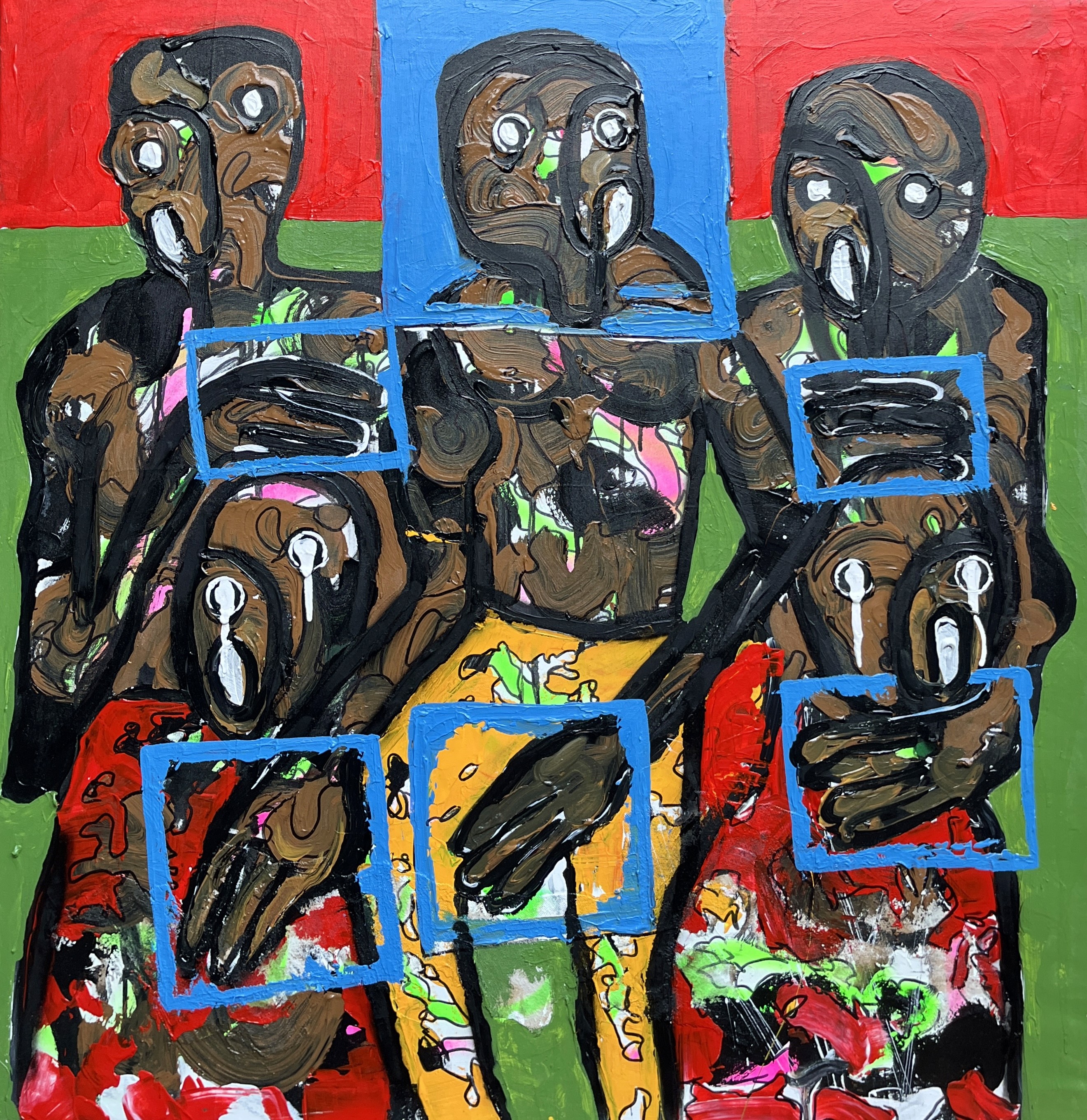
Aksanti's paintings are deeply inspired by what he calls the fragile space between life and death, a theme that recurs throughout his artist statement and practice. His work explores the uncertainty that exists between survival and loss, hope and despair, belonging and displacement.
His style feels emotional and instinctive. Figures emerge through layered textures, newspapers, burnt cloth, spray paint, and bold brushstrokes. The materials themselves carry meaning. Newspapers represent the noise, memories, and realities people experience every day. Burnt cloth symbolizes the scars, resilience, and traces left behind by migrants and displaced communities searching for a place to call home.
Throughout his paintings, brown and black tones reflect his African identity, while flashes of brighter color represent the light he continues searching for.
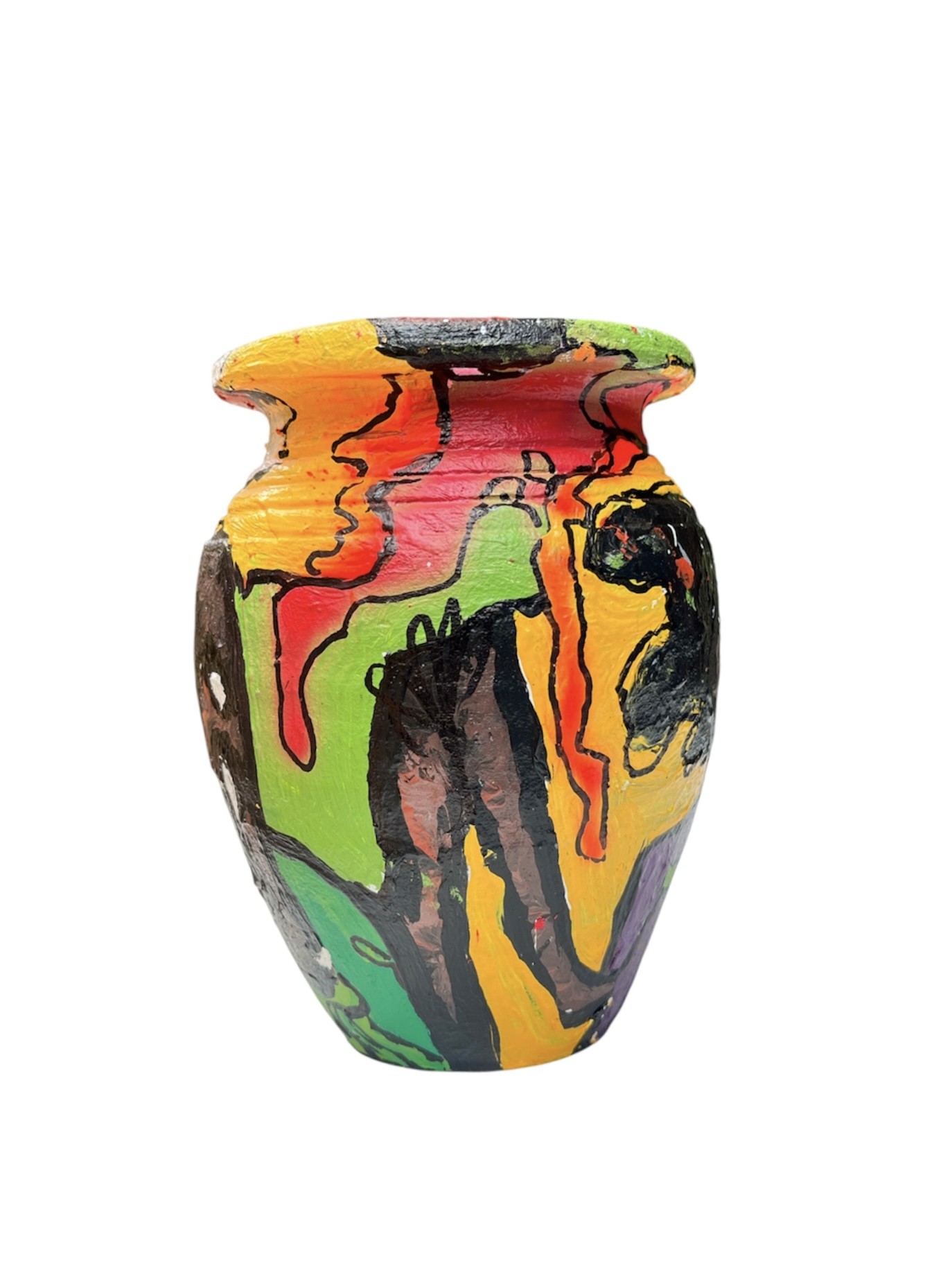
Despite the deeply personal nature of his work, Aksanti hopes his paintings reach beyond his own story. He wants migrants, refugees, and future generations to see themselves reflected in the images he creates. He wants them to know their experiences matter.
Today, his work has been exhibited across Uganda and internationally, including exhibitions in Nairobi, Berlin, and Geneva. But for Aksanti, success is not measured by galleries alone. It is measured by connection.
Every painting is a question. Every canvas is a memory preserved. And through art, Aksanti Bienfait Ba continues transforming displacement into purpose, pain into resilience, and survival into something that can never be forgotten.